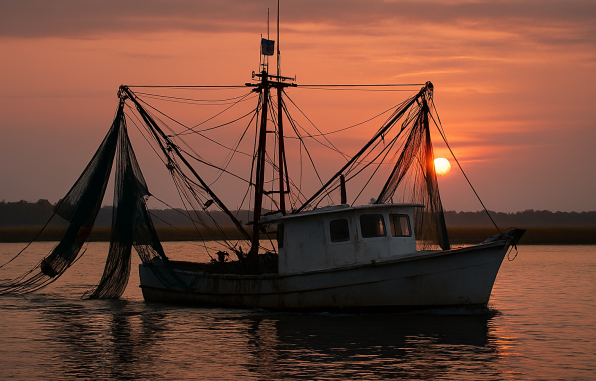
Raleigh trial raises major questions for local shrimpers, small‑boat fishermen, and recreational anglers
By BCNews Staff Writer
Raleigh, NC — A high‑stakes fisheries lawsuit underway in the state capital could bring significant changes to Brunswick County’s coastal waters, even though the county is not named directly in the case. Fishing and conservation groups argue the State of North Carolina failed to protect public trust fisheries and allowed decades of mismanagement that contributed to the collapse of key species such as flounder, shrimp, blue crab, and striped bass.
While the case targets statewide policy, Brunswick County sits squarely inside the coastal system at the center of the dispute. From the Intracoastal Waterway to the Shallotte and Lockwood Folly rivers, the county’s waterways are among the areas where the practices under scrutiny occur daily. Testimony in Raleigh has focused on long‑term declines in species that are essential to the county’s commercial and recreational identity. Local waters — including the ICW, the Cape Fear River, and the county’s network of creeks and estuaries — serve as nursery grounds for juvenile fish and shrimp, supporting small‑scale commercial operators, charter captains, and thousands of recreational anglers.
Although the lawsuit is statewide, many of the management decisions being challenged directly affect Brunswick County. The ICW remains a major corridor for shrimp trawling and mixed‑use fishing. The Shallotte, Lockwood Folly, and Calabash rivers support nursery habitats and small‑boat fishermen. The Cape Fear River holds one of the most depleted striped bass populations in North Carolina. Nearshore Atlantic waters, where flounder and blue crab harvests have sharply declined, are also part of the system under review. These waters are central to the county’s economy — from Calabash seafood houses to the charter docks of Ocean Isle and Holden Beach.
For Brunswick County’s small commercial fishermen, the lawsuit could bring both challenges and potential relief. Independent shrimpers, crabbers, and flounder fishermen may face stricter gear rules, reduced trawling access in the ICW or estuaries, and increased enforcement presence. Many already operate on thin margins and worry the burden will fall hardest on the “little guy.” At the same time, some hope that rebuilding depleted stocks could eventually restore the abundance they remember from decades past.
Recreational anglers, a major part of Brunswick County’s culture and tourism economy could also see changes. Shorter or more restricted seasons expanded nursery protections, and additional no‑fishing or no‑wake zones are all possible outcomes. Families who fish local creeks, pier anglers, and charter customers may experience tighter access in the short term, though long‑term improvements are possible if species recover.
Local fishermen, both commercial and recreational, have already faced years of tightening regulations, including flounder closures, shrinking seasons, declining crab and shrimp harvests, and reduced striped bass access in the Cape Fear River. The lawsuit doesn’t create these issues, but it could accelerate or reshape the regulatory landscape Brunswick County has been navigating for years.
The trial is ongoing, and any ruling could force the state to overhaul how it manages coastal fisheries. Potential outcomes include tighter trawling restrictions, expanded nursery protections, stricter gear rules, accelerated rebuilding plans, and increased enforcement in local waters. Whatever the court decides, Brunswick County with its working waterfronts, recreational fishing culture, and fragile estuarine systems will be among the first places to feel the effects.
©2026 bcdollarsaver.com. All rights reserved.


Be the first to comment