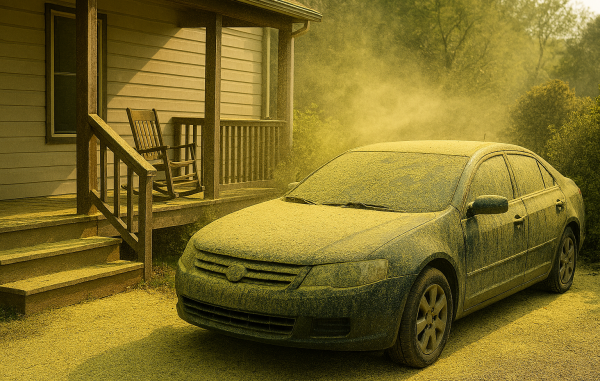
SE NC and NE SC brace for a full‑scale “Pollenpocalypse” as tree pollen erupts weeks ahead of schedule.
By BC News Staff Writer
Lockwood Folly — Tree pollen will soon be blanketing Southeastern North Carolina and Northeastern South Carolina. As February closes out and March ushers in warmer weather that will nudge the regions trees into overdrive.
Elm, juniper, alder, and the first wave of pine will be releasing pollen at levels more typical of mid‑March, creating the familiar yellow film across cars, porches, and waterways.
Residents from Lockwood Folly River to Little River can expect pollen drifting across roads and collecting in thick swirls along the edges of ponds and ditches. Local scenes that define the Pollenpocalypse are found along the ICW, the first warm spell of the season brings that thin yellow sheen drifting across the surface, a slow‑moving film that gathers in the bends near Sunset Harbor, Varnamtown, and the quiet pockets of the Lockwood Folly River.
Locals know it’s not pollution; it’s just the annual reminder that the pines have woken up angry.
In Calabash, Shallotte, Leland, and Little River, residents joke that there’s no point washing your car until June. A freshly rinsed truck can turn yellow before you’ve even made it from the hose to your front door, and dealerships along U.S. 17 keep shop detailers on their toes to keep lot inventory clean.
The front porches from Supply to Tabor City take the brunt of it. Rocking chairs, railings, and welcome mats all get the same dusty coating, and folks who love their morning coffee outside often find themselves wiping down the table with one hand and sneezing with the other.
On windy days, the tall pines along NC‑211 and the Green Swamp release visible clouds of pollen ~ big, dramatic bursts that look like smoke signals rising from the tree line. The new transplants will be slowing down, wondering if something’s burning, only to realize it’s just the forest announcing spring. Even the marsh grass around Ocean Isle and Holden Beach gets that faint golden tint that says, “Spring is here whether you’re ready or not.”
Early season conditions fueling the surge, a stretch of warm, breezy days will accelerate the start of the season. Tree pollen typically begins rising in late February, with counts climbing into the medium – high range on several days. The combination of warm afternoons, dry air, and steady wind create ideal conditions for what many locals call the Pollenpocalypse – when the air is tinted yellow and every outdoor surface becomes a sticky, sneeze‑triggering canvas.
The early start doesn’t shorten the season; it usually extends it. Based on regional patterns:
• Late February/March – Rapid rise in tree pollen
• April – Peak pollen, the height of the Pollenpocalypse
• May – Tree pollen fades; grass pollen increases
• August through October – Ragweed season returns for a late‑year encore.
While no one can fully escape the seasonal haze, some suggestions on how to cope with the yellow tide that allergists recommend. Keep windows closed on high pollen days, rinsing off after outdoor time, and using indoor air purifiers to reduce symptoms. Checking daily pollen forecasts can help residents plan around the worst days, especially during the peak weeks in April.
©2026 BCNewsDollarSaver.com. All Rights Reserved.


Be the first to comment