
The return of a familiar storm name raises questions along the Carolina coast.
By BC News Staff Writer
When the 2026 Atlantic hurricane name list surfaced this month, one name immediately stood out to Brunswick County residents: Isaias. For many along the southeastern North Carolina coast, that name isn’t just another entry on a rotating list. It’s a memory of a fast‑moving 2020 storm that flooded neighborhoods, damaged homes, and left a lasting emotional mark on communities from Ocean Isle Beach to Bolivia. Seeing it return so soon has left many wondering how hurricane names are chosen and why some storms are remembered forever while others quietly cycle back.
Although the National Hurricane Center uses the names in every advisory, it does not create or release the lists. That responsibility belongs to the World Meteorological Organization, a United Nations agency that oversees global weather and climate standards. The WMO maintains six rotating lists of Atlantic hurricane names, each reused every six years unless a name is permanently retired. Because the 2026 list is the same one used in 2020, every name returns exactly as it appeared six years ago, including Isaias.
The natural question is why the name wasn’t retired after the 2020 season. Retirement is reserved for storms that cause catastrophic, widespread destruction or significant loss of life across a large portion of the Atlantic basin. While Isaias produced a deadly tornado in Bertie County and caused notable damage along the North Carolina coast, the overall impact across the entire region did not meet the WMO’s threshold for permanent removal. As a result, the name remains active and is scheduled for reuse in 2026.
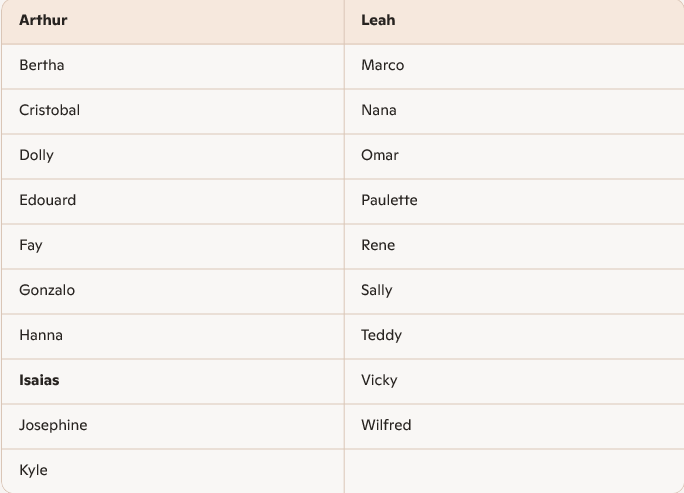
Complete list of names the WMO has assigned for the upcoming season for easy reference:
2026 Atlantic Hurricane Names
For Brunswick County residents who lived through Isaias, the return of the name may feel unsettling, even disrespectful. But the reuse reflects the WMO’s global criteria rather than a dismissal of the storm’s local impact.
In many ways, it highlights the difference between the broad, statistical view used by international meteorologists and the lived experience of coastal communities that remember each storm by the damage it left behind.
©2026 bcdollarsaver.com. All rights reserved.


Be the first to comment