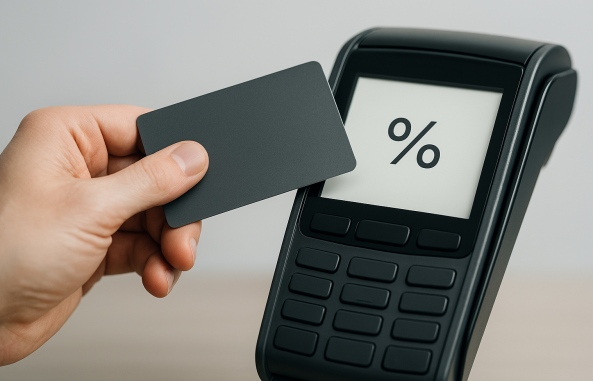
New rules allow limited credit‑card surcharges, but debit‑card fees remain illegal
Originally published February 20, 2026 under BCDollarSaver.com
By Coastal Carolina News Staff Writer
June 12, 2026
North Carolina now allows businesses to add a surcharge when customers choose to pay with a credit card and must follow the amount is limited strict rules. The surcharge is not automatically 3%, and businesses cannot choose any number they want. Instead, the fee must be a percentage that reflects the business’s actual processing cost, and it can never be higher than 3%. For example, if a store pays 2.2% to process credit cards, it may only charge customers 2.2%. If its cost is higher than 3%, the law caps the surcharge at 3%.
UPDATE: Some readers have asked why national guidance sometimes mentions a 4% surcharge limit. Visa and Mastercard allow businesses to surcharge up to 4% nationwide; however, North Carolina law sets a stricter maximum of 3%. This means that even if a business’s actual processing cost for certain premium cards exceeds 3%, the business must still follow the state’s 3% cap and absorb any amount above that limit. Network rules do not override North Carolina law.
These updated surcharge rules took effect January 1, 2026.
Consumers should also know that debit‑card surcharges remain illegal in North Carolina, even if the card is run “as credit,” tapped, or used through a mobile wallet. Card‑network rules classify all debit transactions as debit, and state law does not allow any surcharge on them. Prepaid debit cards fall under the same rule.
ACH and e‑check payments are treated differently. Because they are not card transactions, businesses are allowed to charge a separate ACH processing fee, as long as the fee is clearly disclosed. These fees are commonly used by offices, and rental utilities, government.
UPDATE: Clarification – ACH fees are permitted because they are not card transactions. This does not change any debit‑card rules; debit surcharges remain illegal.
For consumers payment systems, the bottom line is simple: credit‑card purchases may include a small percentage‑based surcharge, debit‑card purchases cannot be surcharged, and ACH payments may include a processing fee. Any credit‑card surcharge must match the business’s actual processing cost and can never exceed 3%.
Convenience Fee vs. Credit‑Card Surcharge
Some consumers confuse convenience fees with credit‑card surcharges, but they are not the same. A convenience fee is charged when a business offers a non‑standard way to pay, such as paying online instead of in person. These fees are typically flat amounts, must be clearly disclosed, and can apply to both debit and credit.
A credit‑card surcharge, by contrast, is a percentage‑based fee added only to credit‑card transactions and is capped at 3% in North Carolina.
Consumer Q&A: Credit‑Card Surcharges in North Carolina
Can a business charge me extra for using a credit card?
Yes. North Carolina now allows a small percentage‑based surcharge on credit‑card purchases. The fee can never be higher than 3%.
Is the surcharge always 3%?
No. Three percent is the maximum, not the default. A business may only charge what it actually pays to process credit cards, up to that 3% cap.
Can a business add a surcharge?
No. debit card surcharges are not allowed in North Carolina, even if the card is run “as credit,” tapped, or used through a mobile wallet.
UPDATE: Header clarification – this question refers specifically to debit‑card surcharges. Credit‑card surcharges are allowed; debit‑card surcharges are not.
What about prepaid debit cards?
They follow the same rule as regular debit cards. No surcharges are allowed.
Can a business charge a flat fee, for using a card?
No. Credit‑card surcharges must be a percentage, not a flat dollar amount.
Are ACH or e‑check payments treated differently?
Yes. ACH and e‑check payments are not card transactions, so businesses may charge a processing long as the fee is clearly disclosed.
How will I know if a business is adding a surcharge?
Businesses must clearly disclose the surcharge before you pay, and it will appear on your receipt.
What if a business charges more than 3% or adds a fee to a debit card?
If a North Carolina consumer is charged more than 3% on a credit‑card surcharge, or any surcharge on a debit card, quick steps:
• Report it to the North Carolina Attorney General’s Office – the AG handles unfair or illegal fees.
• Dispute the charge with your bank or card issuer – illegal surcharges often qualify for reversal.
• Report the business to the card network (Visa/Mastercard) both prohibit debit surcharges and fees above 3%.
Sources: North Carolina General Assembly – Session Law 2024‑65 (Credit‑Card Surcharge Authorization) North Carolina Department of Justice – Consumer Protection Division Visa Core Rules and Visa Product and Service Rules Mastercard Rules – Surcharge and Convenience Fee Guidelines Federal Reserve Payments Study – Debit and Credit Transaction Classifications
Coastal Carolina News is the updated branding for bcdollarsaver.com.
© 2026 CoastalCarolinaNews.com. All rights reserved


Be the first to comment