CHADBOURN, NC — If you were to drive through Chadbourn, a small Columbus County town of fewer than 2,000 residents, you might pass a squat white cinderblock building on a dirt driveway without giving it a second glance. A few cars out front, a modest sign, and an antenna tucked fifty yards behind the structure offer the only hints that this unassuming spot is home to one of the most historically significant radio stations in the United States.
That building houses WVOE‑AM 1590, the oldest African American–owned radio station in the South and the first Black‑owned station ever established in rural America. This spring, WVOE celebrates its 64th anniversary, marking more than six decades of gospel music, community programming, and cultural influence that far outweigh its humble footprint.
A Station Born From Vision and Defiance
WVOE’s story began in 1962, when T.M. “Ted” Reynolds and a group of local Black investors formed Ebony Enterprises — borrowing their name from the iconic African American magazine. On April 24 of that year, the “Voice of Ebony” signed on the airwaves, broadcasting gospel, soul, and R&B to a region where Black ownership of media was virtually nonexistent.
Station president Willie Walls, who hosted the original Sunday gospel show, remembers the moment vividly.
“In 1962, blacks had just been turned loose more or less to freedom, and they wanted to be in the limelight of everything,” Walls said. “To own a Black radio station here in Chadbourn — that was almost something unheard of.”
In truth, it was unheard of. At the time, only four Black‑owned radio stations existed in the entire country — in Atlanta, Kansas City, Detroit, and Huntsville. Chadbourn, North Carolina, became the fifth, beating major Black population centers like New York, Washington, Baltimore, and Los Angeles by years.
While many stations catered to Black audiences, nearly all were owned by white businessmen. WVOE broke that mold, giving African Americans in southeastern North Carolina a platform that was theirs — culturally, musically, and economically.
Survival Through Decades of Change
Black‑owned radio grew slowly through the 1960s and surged in the 1970s, aided by federal policies encouraging minority ownership. By 1995, African Americans owned 146 stations nationwide. But consolidation after the 1996 Telecommunications Act dramatically reduced that number.
WVOE survived, but not without hardship.
By 2019, the station’s building and equipment were deteriorating, and AM radio listenership had dwindled. Facing the possibility of going silent, WVOE turned to the community for help, launching a GoFundMe campaign that drew support from listeners, alumni, and preservationists who understood the station’s cultural value.
Today, WVOE continues to broadcast gospel and Urban Adult Contemporary music, along with inspirational talk and community programming. It does not yet stream online, but its AM signal still reaches listeners across the region — and occasionally as far as Interstate 95 near the South Carolina line.

A Celebration of Legacy
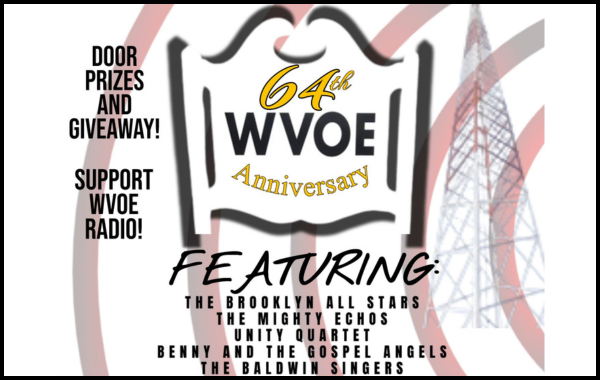
To honor its 64 years on the air, WVOE will host an anniversary celebration on Sunday, April 26, at 600 Pine Log Road in Whiteville. The event will feature performances by:
- The Brooklyn All Stars
- The Mighty Echos
- Unity Quartet
- Benny and the Gospel Angels
- The Baldwin Singers
Advance tickets are $15, or $20 at the door. A $200 raffle giveaway and door prizes are also planned. Tickets and raffle entries can be purchased by calling 910‑654‑5621 or visiting the station’s office at 1528 Old U.S. Highway 74 West in Chadbourn.
A Small Building With a Big Voice
For 64 years, WVOE has been more than a radio station. It has been a cultural anchor, a symbol of Black entrepreneurship, and a rare survivor in a media landscape that has often pushed small, independent stations aside.
Its building may be modest. Its signal may be AM. But its legacy — the legacy of the “Voice of Ebony” — remains enormous.
© 2026 BCDollarSaver.com. All rights reserved.


Be the first to comment