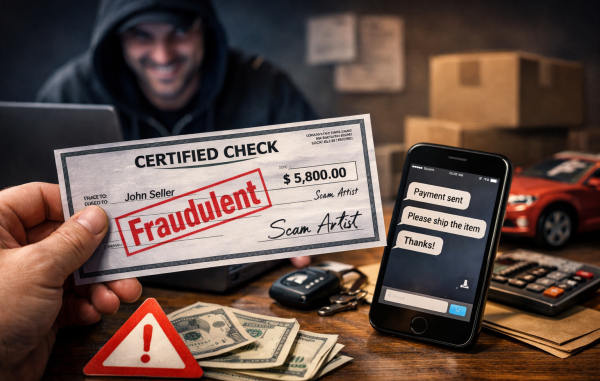
Certified‑Check Scam Targets Local Sellers Listing Vehicles and Equipment Online
By BC News Staff Writer
Scammers posing as buyers are using fake cashier’s checks and “movers” to steal money and merchandise across Southeastern North Carolina.
Residents across Southeastern North Carolina are reporting a rise in a familiar but increasingly polished scam: fake buyers offering to purchase vehicles, golf carts, lawn tractors, and other high‑value equipment using a certified cashier’s check. The scheme, which has circulated for years on online marketplaces, has resurfaced with more convincing personalized messages and faster contact patterns.
The scam typically begins with a text or message sent after a seller posts an item for sale. The buyer expresses strong interest and claims they are ready to purchase immediately. When the seller asks to meet, the buyer provides an excuse, often military deployment, offshore work, or being out of town and insists they cannot view the item in person.
From there, the scammer offers to pay using a certified cashier’s check and asks for the seller’s full name, address, and phone number so the check can be “overnighted by courier.” Once the seller agrees, the buyer introduces a second layer to the scheme: a supposed shipping agent or mover who will pick up the item after the check is deposited.
The turning point comes when the scammer claims the check was issued for too much money. They ask the seller to refund the difference to the mover or return the overpayment through a payment app. The check appears legitimate and may even show as “pending” or “available” in the seller’s bank account. Days later, the bank determines the check is counterfeit and reverses the deposit, leaving the seller responsible for the refunded amount.
Law enforcement agencies and consumer‑protection officials warn that this pattern is consistent with a long‑running overpayment scam. Banks are required to make deposited funds available quickly, but that availability does not mean the check has cleared. By the time the fraud is discovered, the scammer has already collected the refund and disappeared.
Local sellers say the messages often sound polished and professional, with scammers using realistic explanations and avoiding phone calls. Some even provide fake tracking numbers or staged courier confirmations to make the transaction appear legitimate.
Officials advise sellers to avoid accepting certified checks from unknown buyers, refuse any overpayment, and never send money to a third party. Meeting in a police‑station safe‑exchange zone and accepting only verified in‑person payment remain the safest options.
Residents who encounter this scam can report it to the North Carolina Department of Justice’s Consumer Protection Division or through federal reporting systems such as ReportFraud.gov. State officials emphasize that reporting attempts helps investigators track patterns and warn others before they fall victim.
© 2026 BCDollarSaver.com. All rights reserved.


Be the first to comment