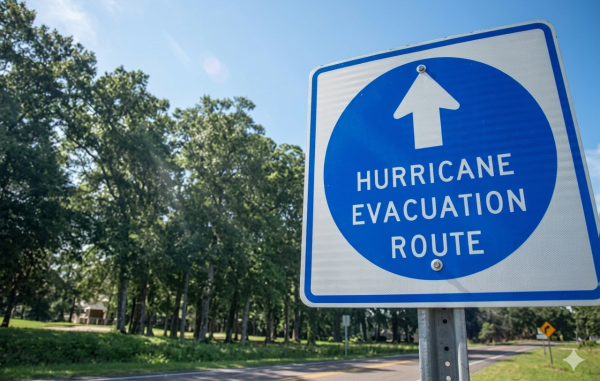
As development accelerates across Brunswick and neighboring coastal counties, long‑standing evacuation routes and hazard plans remain in place – yet many residents say they no longer see those safeguards reflected in modern growth decisions.
Brunswick County, NC — Coastal evacuation routes still exist – but they haven’t changed much. North Carolina’s coastal evacuation system is still active, still mapped, and still used by emergency managers. The primary corridors, including U.S. 17, N.C. 211, N.C. 904, N.C. 87, and the bridges serving Brunswick County’s islands remain the backbone of the state’s hurricane response strategy.
These routes are supported by the statewide Know Your Zone program, which divides coastal communities into tiered evacuation zones based on storm‑surge risk. Emergency managers continue to rely on these zones each hurricane season.
What has not changed is the infrastructure itself. While population has surged, the evacuation network remains largely the same as it was a decade ago.
The hazard mitigation plan is still valid, but increasingly outpaced Brunswick, New Hanover, Pender, and Onslow counties operate under the 2021 Southeastern NC Regional Hazard Mitigation Plan, a FEMA‑approved document that outlines risks from hurricanes, flooding, wildfires, and other threats. These plans are required to be updated every five years, meaning the next update is underway.
The 2021 plan was accurate at the time, but the region’s rapid growth has outstripped many of its assumptions. Thousands of new homes expanded subdivisions, and commercial corridors have been added since the plan was drafted.
The result is a widening gap between the hazards planners identified and the realities now on the ground.
Development decisions rarely hinge on evacuation capacity. Local planning boards review traffic, utilities, zoning, and environmental impacts. But evacuation performance is not a required factor in most development approvals. Hazard mitigation plans offer guidance, not regulation, and they do not automatically restrict growth in high‑risk areas.
That disconnect is what many residents are noticing:
– Evacuation routes exist, but they are not expanded as quickly as neighborhoods.
– Hazard plans exist, but they are not binding on development.
– Emergency managers plan for storms, while planning boards approve projects often on separate tracks.
The bottom line – Coastal evacuation routes and hazard mitigation plans are still active, still required, and still used by state and county officials. But the region’s explosive growth has outpaced the systems designed to protect it, leaving many residents questioning whether the safeguards that once guided coastal development are still being meaningfully considered.
© 2026 BCDollarSaver.com. All rights reserved.


Be the first to comment