
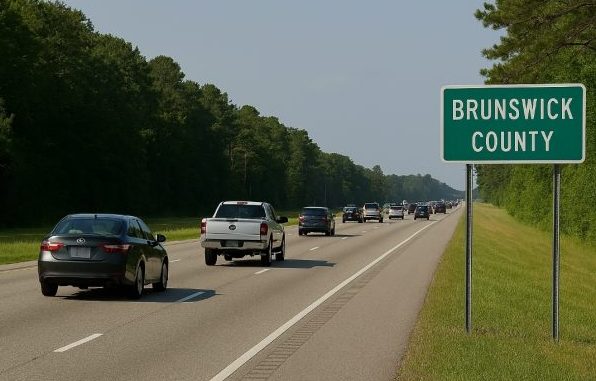
New estimates highlight concentrated growth along the US‑17 corridor
By BCNews Staff Writer
Brunswick County was formed in 1764 and remained a largely rural, lightly populated region for most of its history, shaped by agriculture, timber, and coastal fishing. Growth began to accelerate in the late 20th century as new roads, bridges, and beach access opened the area to tourism, second homes, and retirement‑oriented development. By the early 2000s, the county had become one of the fastest‑growing in North Carolina, with towns such as Leland, Shallotte, and Calabash expanding through new subdivisions and master‑planned communities.
Since 2019, that growth has intensified, particularly in the northern end of the county. Recent state population estimates show that Leland has experienced the most significant population increase in Brunswick County over the past five years, adding thousands of new residents through large residential developments and continued in‑migration.
Its proximity to Wilmington and the build‑out of the US‑17 corridor have made it the county’s fastest‑growing municipality. Other communities, including Shallotte, Calabash, and Carolina Shores, have also expanded, though none at the pace seen in Leland.
As development has accelerated, public discussions have increasingly focused on infrastructure capacity. Traffic along major corridors such as US‑17, NC‑211, and NC‑904 has grown heavier, school enrollment has risen faster than new facilities can be built, and water, sewer, and stormwater systems face ongoing demand. Growth also adds pressure to the county’s emergency planning systems. More residents along key corridors mean heavier traffic on the same limited routes used during hurricane evacuations, increasing the time required to move people inland. Population increases within the Brunswick Nuclear Plant’s 10‑mile Emergency Planning Zone also influence traffic modeling and notification procedures, requiring regular updates to ensure plans keep pace with development.
Environmental considerations have also become more prominent, including the loss of natural areas, increased flooding concerns, and the impact of growth on waterways such as the Cape Fear River and coastal estuaries. These issues intersect with long‑range land‑use planning, as officials and residents work to balance rural character with continued residential and commercial expansion. With growth concentrated in specific corridors and municipalities, development remains a central topic in county and municipal meetings, shaping decisions about infrastructure, zoning, and the future of one of North Carolina’s fastest‑changing coastal regions.
©2026 bcdollarsaver.com. All rights reserved.

Be the first to comment