May 4, 2026
BRUNSWICK COUNTY, NC — Your home is your castle, but in 2026, the walls are no longer made of brick and mortar—they are made of digital records at the County Register of Deeds. Across Brunswick, Columbus, and Horry counties, a sophisticated wave of “silent” crime known as deed fraud is forcing homeowners and lawmakers to rethink property security.
Unlike a traditional burglary, deed fraud (or “home title theft”) happens in the light of day, often via the mail or a computer screen. By the time a victim realizes their property has been stolen, the criminal has often already sold the land or vanished with a six-figure equity loan.
The Mechanics of the Steal
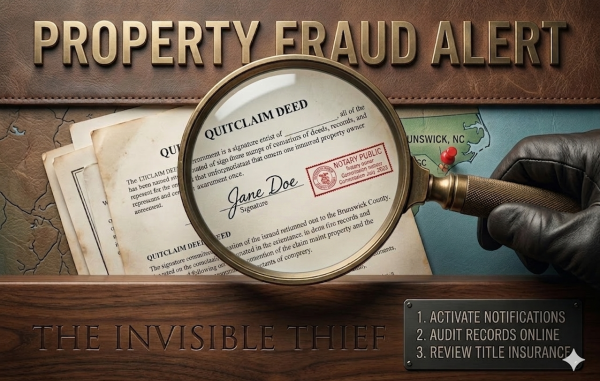
Scammers typically target “low-hanging fruit”: vacant lots, secondary vacation homes, or properties owned by seniors with significant equity. The process is chillingly simple. First, a fraudster forges the owner’s signature on a Quitclaim Deed. Using a fake seal or a compromised notary, the document is “verified” and then filed with the local Register of Deeds. In the eyes of the public record, the scammer now appears to be the legal owner.
“It’s a mechanical theft,” says one local real estate expert. “Once that paper is recorded, they can walk into a bank, take out a mortgage against your hard-earned equity, and walk away.”
On the Docket: New Laws for a New Threat
State lawmakers in both Raleigh and Columbia have spent the first half of 2026 fast-tracking legislation to close the loopholes that scammers exploit. In North Carolina, House Bill 431—the Preventing Deed Fraud Act—seeks to turn the Register of Deeds from a passive recorder into a proactive gatekeeper. The bill would require “non-trusted submitters” to present a government-issued photo ID before a deed can be recorded and would empower officials to refuse documents that appear suspicious or fail to match official notary records.
South Carolina is taking a similar approach with Senate Bill 822. Introduced in early 2026, this bill would create a specific felony for “Deed Theft.” If passed, perpetrators would face up to five years in prison, explicitly defining the act of forging real estate instruments as a high-level crime rather than a standard fraud case.
Local Alerts: Your First Line of Defense
While the law catches up, local officials are urging residents to use the “burglar alarms” already available at the courthouse. Both Brunswick County and Horry County now offer free Fraud Alert or Recording Notification Services. Once you sign up with your name or parcel ID, the county will automatically email you the moment any document—a deed, a lien, or a mortgage—is filed against your property.
“Learning about possible fraud quickly can allow property owners to take immediate action and prevent further damage,” notes the Horry County Register of Deeds.
Homeowner’s Checklist: Defending Your Title
To ensure your property remains secure, it is recommended that local residents take these three proactive steps:
-
Enroll in Automated Fraud Alerts: Visit the Brunswick, Columbus, or Horry County Register of Deeds websites to sign up for free notification programs. These services send an immediate email if a deed, lien, or mortgage is filed under your name or parcel ID.
-
Conduct a Records Audit: Periodically search your name in the county’s online land records database to verify the “chain of title” is correct. For those owning vacant land or secondary homes, ensure your current mailing address is on file with the county tax office so you never miss a tax bill or legal notice.
-
Verify Notaries and Insurance: Before signing any property documents, you can verify a notary’s commission through the N.C. or S.C. Secretary of State websites. Additionally, consult with a real estate attorney regarding “Enhanced” Owner’s Title Insurance, which offers specific protections against future forgery that standard policies may not cover.
In the coastal Carolinas, where land value continues to soar, the price of ownership is eternal vigilance. Don’t wait for a “Sold” sign to appear in your yard to find out you no longer own the ground beneath your feet.
For more regional news and community updates, visit BCDollarSaver.com
2026 BCDollarSaver.com. All rights reserved.


Be the first to comment