
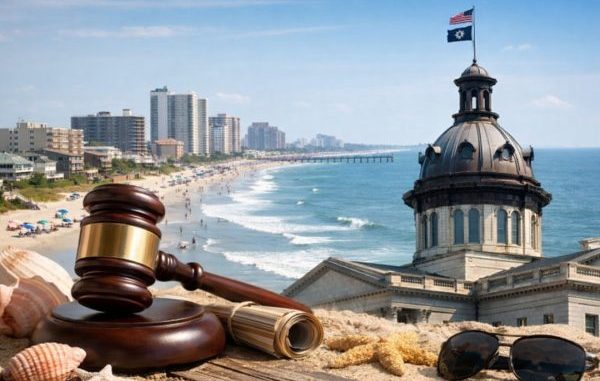
Two competing proposals in Columbia take opposite approaches, leaving uncertainty for homeowners, renters, and tourism‑driven businesses from Myrtle Beach to Murrells Inlet.
COLUMBIA, SC — South Carolina lawmakers are considering two conflicting bills that could significantly affect short‑term rentals across the state, including the heavily traveled Myrtle Beach to Murrells Inlet corridor in Horry County.
One proposal would give cities and counties the authority to restrict or even ban short‑term rentals, while the other would prevent local governments from doing so.
Both bills remain in committee, and neither has advanced toward a floor vote.
The debate comes as coastal communities continue to see rapid growth in Airbnb and VRBO listings, particularly in neighborhoods near U.S. 17 Business and U.S. 17 Bypass. Local officials have raised concerns about noise, parking, and the loss of long‑term housing, while property owners and tourism‑dependent businesses argue that short‑term rentals are essential to the region’s economy.
Senate Bill 442 would allow municipalities and counties to enact ordinances prohibiting the rental of residential dwellings for fewer than 29 days. The measure would give local governments broad authority to regulate or restrict short‑term rentals in residential zones. If adopted, cities such as Myrtle Beach, Surfside Beach, and the Horry County government could set their own rules for areas including Garden City, Socastee, and parts of Murrells Inlet.
House Bill 3861 takes the opposite approach. It would bar local governments from prohibiting short‑term rentals and would penalize jurisdictions that attempt to restrict them. Under this proposal, short‑term rentals would remain legal statewide, and cities would be limited to enforcing general safety, noise, and parking ordinances.
The competing bills reflect a broader statewide divide between neighborhood preservation and property‑rights advocacy. Coastal communities with high tourism traffic have pushed for more local control, while homeowners, investors, and small businesses say consistent statewide rules are needed to protect the rental market.
Tourism‑reliant businesses along the Grand Strand, including restaurants, surf shops, and seasonal employers, are watching the legislation closely. Weekly renters and weekend visitors make up a significant share of customer traffic for establishments from Myrtle Beach to Murrells Inlet.
Any reduction in short‑term rental availability could affect foot traffic, especially during shoulder seasons.
For now, both bills remain stalled in committee, and no statewide changes have been enacted. Local ordinances in Horry County and its municipalities continue to operate under existing law. Lawmakers have not indicated when, or if, either proposal will move forward.
© 2026 BCDollarSaver.com. All rights reserved.


Be the first to comment