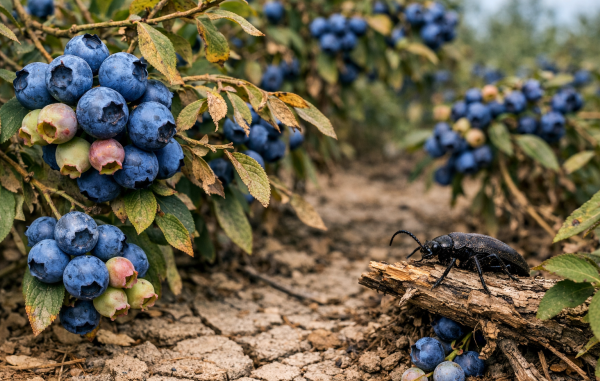
SOUTHEASTERN NORTH CAROLINA — As blueberry season reaches its busiest stretch across southeastern North Carolina, researchers say ongoing drought conditions are making local bushes more susceptible to a native beetle now confirmed to be feeding on their roots.
NC State University has identified the tile‑horned prionus, a longhorn beetle native to the Southeast as the cause of sudden plant decline in multiple growing areas. The beetle is not invasive, but the prolonged dry weather has weakened blueberry root systems, creating the same stressed conditions the insect typically targets in declining hardwoods.
Extension specialists report that the larvae feed underground for multiple years, hollowing out roots and reducing the plant’s ability to take up water. During drought, that loss becomes more severe, often leading to sudden collapse even when bushes appear healthy above ground.
Growers say the timing is difficult. U‑pick farms and local markets are in peak season, yet the underground damage is hard to detect until a bush wilts or pulls up easily from the soil. With no insecticides currently labeled for prionus control in blueberries, growers are focusing on irrigation, stress reduction, and removing heavily damaged plants.
Agricultural officials emphasize that the beetle affects the plant, not the fruit, and poses no risk to customers. Local farms remain open for picking.
© 2026 BCDollarSaver.com. All rights reserved.


Be the first to comment