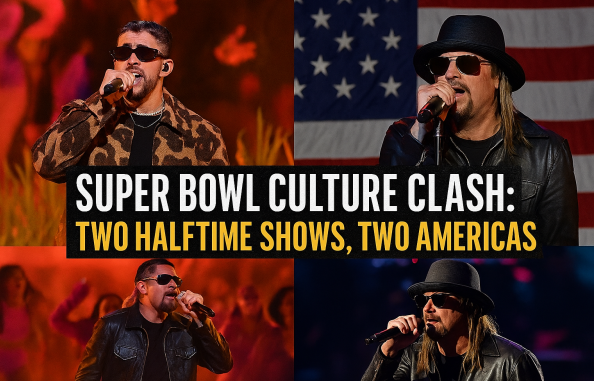
Two halftime shows, two audiences, and a cultural divide playing out in real time.
By BCNews Staff Writer
The Super Bowl delivered more than a championship game this year. It delivered a cultural split-screen. As Bad Bunny headlined the NFL’s official halftime show, a separately produced “All‑American Halftime Show” streamed online as a patriotic counter‑event. The result was a night that revealed two sharply different visions of American identity – and two very different audiences cheering them on.
Bad Bunny’s performance unfolded as a full celebration of Latino culture, marking a milestone moment for Spanish‑language music on one of the nation’s largest broadcast stages. The staging, choreography, and guest appearances underscored Puerto Rican pride and global pop influence, with social media lighting up in real time. Supporters called the show “historic,” praising the visibility of Latino artists and the energy of the reggaeton driven set. Viral clips of cameos, especially Lady Gaga and Ricky Martin, circulated across TikTok and Instagram within minutes.
The cultural weight of the performance sparked political reaction, including criticism from President Trump and conservative commentators who argued the show was overly political. That criticism fueled a second wave of online debate, with users on X and Facebook trading views on whether the performance was a celebration of diversity or a pointed cultural statement. The conversation quickly became one of the night’s defining storylines.
At the same time, the All‑American Halftime Show positioned itself as a patriotic alternative. Produced by Turning Point USA, the event featured Kid Rock, Brantley Gilbert, Lee Brice, and other country‑rock artists. Its messaging centered on faith, freedom, and traditional Americana, an intentional contrast to the NFL’s main show. Conservative audiences rallied around the broadcast, sharing clips alongside flags, military tributes, and calls for “real American music.” The online turnout reached millions across platforms, demonstrating strong enthusiasm even if the reach remained far smaller than the NFL’s national telecast.
Social media became the battleground where the two performances collided. One side celebrated multicultural America; the other defended traditional patriotism. Algorithms amplified the divide, with users largely seeing content that matched their existing views. Memes and satire blended the two worlds, joking that the country was hosting “dueling halftime shows for dueling Americas.”
The night ended with more than music — it ended with a mirror held up to the country. One show championed a multicultural America surging into the mainstream: the other rallied around tradition, faith, and familiar symbols of national pride. The divide didn’t stay onstage. It spilled across social platforms, where millions chose a side, defended it loudly, and turned the halftime break into a referendum on who gets to define American culture. In a year already marked by sharp contrasts, the Super Bowl simply made them impossible to ignore.
©2026 BCDollarSaver.com. All rights reserved.


Be the first to comment