How local gardens are creating a vital conservation corridor for North Carolina’s pollinators
By BC News Staff Writer
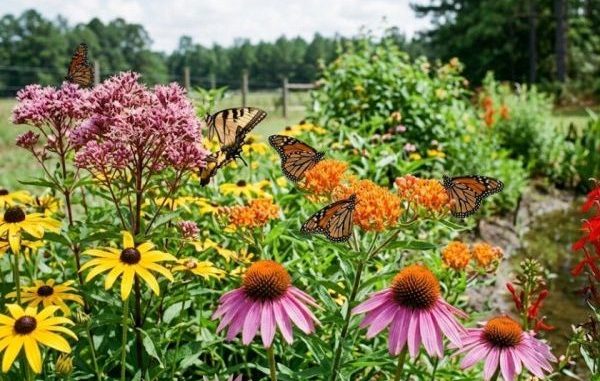
Across North Carolina, a new kind of “highway” is taking shape ~but you won’t find it on a GPS. The Butterfly Highway is a statewide conservation network of native plant habitats, known as “Pollinator Pitstops.” These patches of land are designed to give bees, birds, and butterflies a safe corridor to travel, feed, and reproduce in an increasingly developed landscape.
For Columbus County, this initiative is more than a gardening trend; it is a vital support system for our local agricultural economy and the unique natural ecosystems of the Coastal Plain.
While the Highway spans from the mountains to the coast, its strength lies in local participation. In Columbus County, our specific geography creates essential “rest stops” in the regional ecological chain, a critical link for our towns.
Whiteville & Chadbourn: These hubs bridge the gap between urban centers and rural acreage. By planting native flowers like Butterfly Weed in backyard gardens, residents support the pollinators that local strawberry and blueberry farmers depend on for successful harvests.
Lake Waccamaw & The Lumber River: These areas serve as the “grand stations” of the highway. The moist, loamy soils near our waterways are ideal for Joe Pye Weed and Swamp Milkweed, which fuel the long-distance migrations of Monarch butterflies and support the biodiversity of the river basin.
Tabor City & Fair Bluff: Situated near the county lines, these towns act as gateways for pollinators traveling from South Carolina or moving along the scenic Lumber River corridor.
The success of the Butterfly Highway relies on a “native first” approach. Many pollinators have specialized relationships with specific plants. For example, the Monarch butterfly only lays its eggs on Milkweed. Without these specific native species, the next generation simply won’t survive.
In our local sandy soils, heat-tolerant natives like Blazing Star and Goldenrod provide high-energy nectar during the fall migration. Near the riverbanks, the brilliant red Cardinal Flower acts as a beacon for both butterflies and hummingbirds.
The Butterfly Highway isn’t limited to residential backyards. Schools and businesses in Columbus County are encouraged to lead the charge:
- For Schools: Transforming a patch of schoolyard into a certified “Pollinator Pitstop” provides a living classroom for students to study biology and ecology firsthand.
- For Businesses: A pollinator garden is a “green” badge of honor. Businesses can certify their landscapes as Wildlife-Friendly, beautifying their storefronts while signaling a commitment to the local environment.
Anyone can participate, regardless of the size of their land. Whether you have a hundred-acre farm or a few containers on a downtown porch, you can add your coordinates to the map.
- Plant Native: Choose species adapted to the North Carolina Coastal Plain.
- Go Chemical-Free: Avoid pesticides that can harm the very guests you are trying to invite.
- Register Your Spot: Visit the North Carolina Wildlife Federation (NCWF) website to officially register your garden.
- Display Your Sign: Once registered, residents can display an official “Butterfly Highway” sign to encourage neighbors to join the movement.
By transforming our local landscapes into pitstops, we aren’t just growing flowers ~we’re growing a future for the wildlife that makes Columbus County home.
Top Five Plants for Columbus County Soil:
- Butterfly Weed (Asclepias tuberosa): Thrives in sandy soil; essential for Monarchs.
- Joe Pye Weed: Ideal for moist areas near the lake or river.
- Black-eyed Susans: A hardy, sun-loving classic.
- Purple Coneflower: A nectar-heavy magnet for all pollinator types.
- Mountain Mint: Offers one of the highest nectar rewards in the state.
While many local hardware stores carry flowers, these regional specialists focus on the native species required for the Butterfly Highway:
- Shelton Herb Farm, Leland, NC – A nearby source for coastal native perennials.
- Lumber River Native Plants, Gibson, NC – Specialists in wetland and woody natives.
- NC Wildlife Federation, Offers official “Butterfly Highway” seed packets via ncwf.org
© 2026 BCDollarSaver.com. All rights reserved.


Be the first to comment