Mandatory restrictions in Brunswick County extend across all connected systems, while CFPUA begins voluntary conservation July 9.
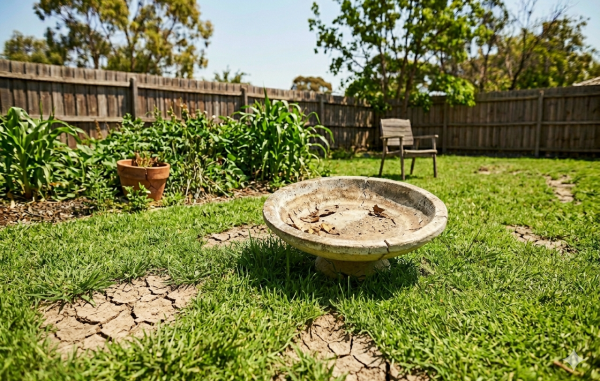
As drought conditions intensify across southeastern North Carolina, water systems throughout the region are tightening their guidance to customers. Some utilities are already under mandatory restrictions, while others are stepping into voluntary conservation measures as extreme heat continues to push daily demand higher. Together, the advisories reflect a growing regional effort to stabilize water use before conditions worsen.
Brunswick County remains the most affected system, holding at Stage 2 water conservation and warning that usage levels are edging close to Stage 3. County officials say the combination of prolonged heat, high irrigation demand, and deepening drought indicators has placed sustained pressure on the system. Because Brunswick County supplies water to a wide network of towns – including Leland, Belville, Navassa, Southport, Oak Island, St. James, Shallotte, Calabash, and Carolina Shores, the Stage 2 restrictions extend across the entire service area. None of these municipalities operate independent water plants, meaning Brunswick’s declaration automatically applies to their customers.
That connection also places H2GO, which serves Belville, Leland, and Navassa, under the same restrictions. Although H2GO has not declared a drought stage, its customers in Leland, Belville, and Navassa are under Stage 2 because Brunswick County supplies their water and is already enforcing those limits. For readers, the takeaway is simple: H2GO hasn’t announced its own restrictions, but its customers still fall under Stage 2.
The Town of Leland falls under the same umbrella. Leland does not operate its own water system and relies on Brunswick County and H2GO for supply, placing its customers squarely within Brunswick’s Stage 2 restrictions despite the absence of a town‑specific announcement.
While Brunswick County manages mandatory limits, the Cape Fear Public Utility Authority (CFPUA) is taking a different approach. Serving Wilmington and surrounding communities, CFPUA is joining the regional conservation effort by asking customers to begin voluntary water reductions starting Thursday, July 9. The authority is not under a formal drought stage, but officials say voluntary conservation will help ease strain on the system as temperatures remain high and rainfall stays scarce. Customers are encouraged to limit irrigation, postpone car‑washing, and reduce discretionary water use.
Other nearby systems have not yet escalated their drought response. Pender County Utilities continues normal operations without restrictions, and Grand Strand Water & Sewer Authority in Horry County has issued heat‑related usage advisories but no drought‑stage declarations.
Taken together, the region’s water‑system guidance paints a clear picture: Brunswick County’s Stage 2 restrictions remain the most urgent signal, and CFPUA’s voluntary measures show that utilities across southeastern North Carolina are preparing for sustained high demand. With drought conditions deepening and temperatures holding steady, agencies are urging residents to cut back on non‑essential water use now to help stabilize supply through the weeks ahead.
Coastal Carolina News is the updated branding for bcdollarsaver.com.
© 2026 CoastalCarolinaNews.com. All rights reserved


Be the first to comment