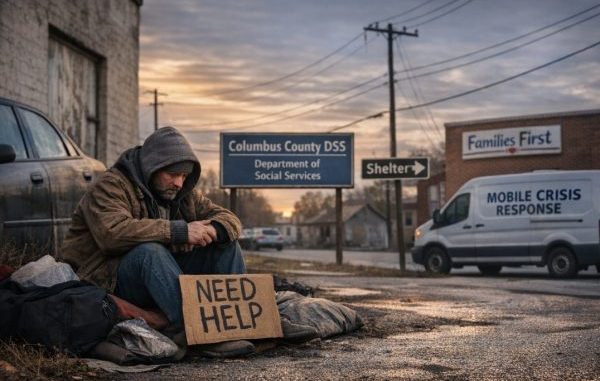
With no overnight shelter in place, local agencies coordinate crisis response, emergency housing, and mental health support for residents without stable homes.
WHITEVILLE, NC — Columbus County has no general homeless shelter. Yet every week, residents without stable housing – whether by crisis, illness, or choice – seek help. And while the county lacks overnight beds, it does offer access to emergency placement, crisis response, and long-term housing support through a network of local agencies.
Coordinated Entry: The First Step
The county participates in North Carolina’s Balance of State Continuum of Care, a statewide system that connects people to emergency lodging, rehousing programs, and case management. Locally, residents can begin this process through Columbus County DSS, Families First, or Four County Community Services.
DSS: Emergency Help and Benefits
The Department of Social Services is often the first stop for those displaced. DSS can assist with temporary housing, transportation, and benefits like Medicaid and food aid. Staff regularly work with residents living in cars, abandoned buildings, or unstable arrangements, all considered homeless under state guidelines.
Families First: Shelter for Unsafe Situations
Families First operates an emergency shelter for survivors of domestic violence and unsafe living conditions. While the shelter prioritizes abuse cases, staff also help connect others to appropriate resources. Advocates say domestic violence remains a leading cause of homelessness for women and children in rural counties.
Mental Health and Crisis Response
For homelessness tied to mental illness or substance use, Mobile Crisis services offer immediate, on-site help. Integrated Family Services runs the 24/7 response line and can arrange temporary placement, stabilization, and referrals to treatment.
No Local Shelter, But Nearby Options
Residents needing overnight shelter are often referred to nearby facilities:
– Lumberton Christian Care Center (Robeson County, NC)
– Good Shepherd Center (New Hanover County, Wilmington, NC)
– North Strand Housing Shelter (Horry County, SC)
These shelters typically require a Coordinated Entry Referral, making local agencies the essential first step.
Hidden Homelessness, Real Impact
In rural counties, homelessness is often invisible, marked by couch-surfing, car living, or overcrowded homes. Providers say this “hidden homelessness” makes the issue harder to track and easier to overlook.
Still, the need persists. And help is available.
Columbus County DSS – 910‑642‑2800
Families First – domestic violence or unsafe housing
Mobile Crisis 866.437.1821
Four County Community Services – housing assistance
As housing pressures rise, the conversation around homelessness and the need for sustainable solutions is becoming more urgent.
© 2026 BCDollarSaver.com. All rights reserved.


Be the first to comment