By BC News Staff Writer
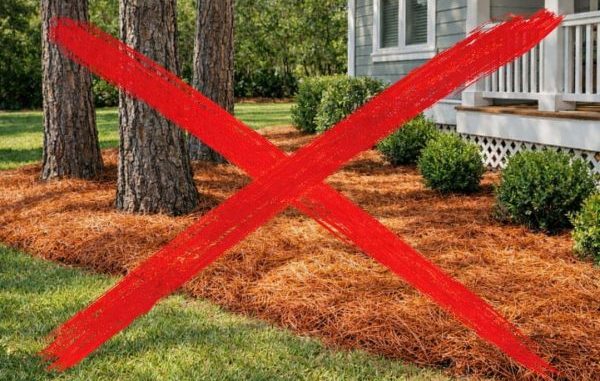
BOLIVIA, NC — Across Brunswick County’s coastal subdivisions, pine straw is the default landscaping choice: a neat, amber blanket packed against foundations, wrapped around porch posts, and tucked beneath shrubs. It’s inexpensive, visually uniform, and sourced from the region’s longleaf pine forests. But fire marshals and emergency officials warn it behaves like a fuse leading straight to the home.
Pine straw is a major regional commodity, with North Carolina landowners earning significant income by selling or leasing harvesting rights to suppliers who bale and distribute the needles to landscaping businesses. Yet researchers at NC State University point out a stark contradiction: in natural ecosystems, these same resin‑rich needles are prized as “fine fuels” that carry prescribed burns across the forest floor.
The danger lies in structure. Pine needles fall in loose, aerated layers with a high surface‑area‑to‑volume ratio, requiring very little heat to ignite. U.S. Forest Service testing shows pine straw is the most flammable natural groundcover evaluated. A dry bed can ignite almost instantly from a firework, a fire‑pit ember, or a discarded cigarette.
Once burning, pine straw produces tall, fast‑moving flames. In flammability trials presented to North Carolina municipal leaders, pine straw recorded a fire‑spread rate of 90 inches per minute, far outpacing bark or wood‑chip mulches. At that speed, flames can reach a structure in seconds.
The risk doesn’t require a nearby wildfire. During regional woods fires, coastal winds can carry embers long distances. The loose texture of pine straw traps these embers and feeds them oxygen, allowing a single spark to transition into open flame. Local emergency personnel report that homes surrounded by pine straw often suffer total loss from ember ignition, while neighboring properties using stone or bark mulch avoid structural involvement.
Placement is the critical factor. Homeowners routinely pack pine straw directly against vinyl siding, shrubs, and wooden decks, all highly vulnerable to radiant heat and direct flame. Once ignited against a structure, pine straw can melt siding, break windows, and allow fire to enter wall cavities or attic vents. A recent fire in a neighboring county did just that.
Some coastal communities have already acted. The Village of Bald Head Island prohibits any landscaping material with a fire‑spread rate above 24″ per minute within 25 feet of a combustible exterior, effectively banning pine straw near homes.
Pine straw should be replaced with stone, gravel, or hardscape. If used at all, experts say it should be limited to isolated beds separated from the home by lawn or pavement. Maintaining the classic coastal look without these safety buffers, they warn, may come at the highest cost.
© 2026 BCDollarSaver.com All rights reserved.


Be the first to comment