A three‑county look at the absenteeism reshaping classrooms in Brunswick, Columbus, and Horry and what schools are doing to bring students back.
By BC News Staff Writer
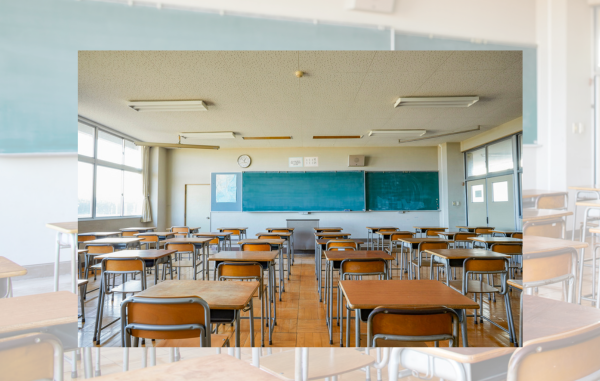
Shallotte, NC — Across Brunswick, Columbus, and Horry counties, teachers are opening classroom doors each morning to empty desks. What began as a pandemic‑era disruption has hardened into a regional crisis that threatens academic progress, school funding, and the long‑term health of the coastal workforce. And while the causes are complex, one truth is becoming increasingly clear: boys and girls are disappearing from school for very different reasons.
As of May 2026, Horry County Schools is the only district among the three with a publicly released chronic absenteeism rate for the current reporting cycle. The South Carolina Department of Education reports Horry County at 19.4% chronic absenteeism for the 2024–25 school year, down from 21.1% the year before. Source: SC Department of Education – Chronic Absenteeism Report 2024–25 (published May 28, 2026).
Brunswick County Schools and Columbus County Schools publish attendance data through the North Carolina School Report Cards system, but NC DPI has not yet released the 2025–26 chronic absenteeism percentages for either district. Source: North Carolina Department of Public Instruction – NC School Report Cards (accessed May 2026).
This leaves Horry County as the only district with a confirmed, current absenteeism percentage, while Brunswick and Columbus remain in a holding pattern until the state releases updated report cards.
In Brunswick County, absenteeism remains elevated, though district data from prior years shows gradual improvement following the pandemic. Brunswick County Schools has updated its attendance policy and increased communication with families as part of its ongoing effort to address chronic absenteeism.
In Columbus County, chronic absenteeism has historically been among the highest in the state. Prior years show rates reaching 40% to 50% in some schools. Current‑year data is pending release from NC DPI.
In Horry County, the verified 19.4% absenteeism rate remains significantly above pre‑pandemic levels. District leaders have identified attendance as a priority area in state accountability reports.
Across all three counties, the pattern is unmistakable: students are disconnecting from school.
Why our students aren’t showing up across the region point to a combination of mental‑health challenges, academic frustration, bullying, transportation barriers, family stress, digital distraction, and the lingering collapse of routines that began during the pandemic. But gender plays a significant role in how and why students disengage.
Girls: When a Bond Breaks, Attendance Breaks
Girls tend to attend more consistently than boys, until they lose a trusted adult or feel socially unsafe. A single teacher relationship can anchor a girl’s entire school experience. When that bond is disrupted by a staff departure, a schedule change, or social conflict, attendance often drops sharply.
Girls are more likely to stay engaged when they feel emotionally safe, supported by peers, listened to by teachers, and grounded in predictable routines. When those conditions erode, attendance often follows.
Boys: Purpose, Competence, and Action Drive Attendance
Boys are more likely to be chronically absent but not because they lack relationships. They lack purpose. Boys tend to show up when school offers something to master, something to build, something to compete in, or a mentor who challenges them. They bond through action rather than conversation.
A coach, a shop teacher, a band director, or a JROTC instructor often becomes the reason a boy walks through the door. When school feels repetitive, irrelevant, or disconnected from their strengths, boys disengage quickly.
Schools across the region have adopted a range of strategies to address chronic absenteeism. Incentive‑based approaches, such as attendance celebrations, raffles, and special events are common in elementary schools and can boost short‑term attendance. However, these strategies tend to have limited impact on middle and high school students.
Districts also use accountability measures, including mandatory parent meetings, home visits, attendance contracts, and, in some cases, truancy referrals. These interventions can be effective when absences stem from parent‑controlled factors, but they are less successful when the underlying issues involve mental health, bullying, or academic difficulty.
The most effective strategies tend to be connection‑based. Schools are investing in check‑in/check‑out mentoring, advisory periods, peer support groups, restorative practices, expanded extracurricular opportunities, and efforts to ensure every student has at least one trusted adult on campus. Educators across the region emphasize that students are not skipping school because they do not care; they are skipping because something essential is missing — whether emotional safety, academic confidence, or a sense of purpose. The challenge is identifying what each student needs and rebuilding that connection.
The consequences of chronic absenteeism are already visible across the region. Schools report lower reading and math scores, higher dropout risk, reduced state funding, increased teacher burnout, widening gaps between rural and suburban communities, and long‑term concerns about the local workforce pipeline. Without meaningful intervention, educators warn the region could face a generational setback.
Brunswick, Columbus, and Horry counties are distinct communities, but they share the same crisis. And they may require the same solution: connection for girls, purpose for boys, and a sense of belonging for every student. Schools across the region are working to rebuild those foundations, one student at a time.
© 2026 BCDollarSaver.com. All rights reserved.


Be the first to comment