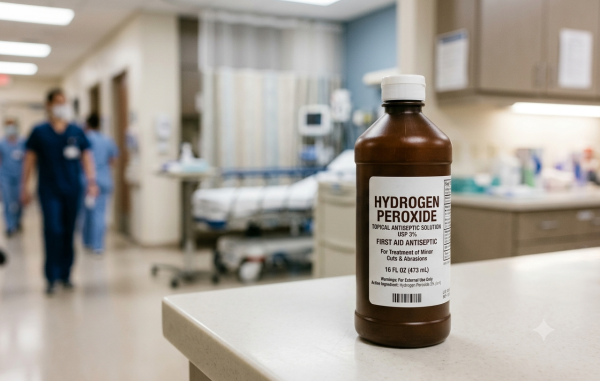
Experts outline which household uses remain safe and which health remedies should be avoided
By BC News Staff Writer
Hydrogen peroxide remains a common household disinfectant, but modern medical guidance is clear: its safe uses are limited, and many long‑standing home remedies are no longer recommended.
Household Cleaning and Disinfection
A 3% hydrogen peroxide solution effectively kills bacteria, viruses, fungi, and mold on hard surfaces when allowed to sit for several minutes. It’s also used to sanitize produce when diluted—about 1/4 cup per gallon of water—before rinsing.
Not Recommended for Skin or Wounds
Doctors now advise against using hydrogen peroxide on cuts, scrapes, or acne. Research shows it can irritate skin and slow healing by damaging healthy tissue. Mild soap and water remain the preferred first‑aid method.
Oral and Dental Uses
Hydrogen peroxide is a whitening agent in many dental products. Dentists note it can brighten teeth but may increase sensitivity. Diluted rinses can reduce oral bacteria, but swallowing peroxide is unsafe and can cause burns or stomach irritation.
Safety Notes
Low‑concentration peroxide is generally safe for household use, but it can irritate eyes, skin, and the respiratory system. Ingesting or inhaling higher concentrations can cause serious injury. Federal health agencies classify it as a strong oxidizer and set strict workplace exposure limits to prevent harm.
Hydrogen peroxide is still useful for surface disinfection, produce cleaning, and dentist‑guided whitening, but it should not be used on skin, wounds, or taken internally.
Disclosure: This article provides general health information from reputable medical and public‑health sources and is not a substitute for professional medical advice. Individuals with health concerns should consult a licensed healthcare provider.
© 2026 BCDollarSaver.com. All rights reserved.


Be the first to comment