A Comprehensive Guide to Burn Barrels, Municipal Ordinances, and Local Custom
By BC News Staff Writer
Columbus County, NC — Navigating the landscape of open burning requires a clear understanding of the “Golden Rule” established by the North Carolina Division of Air Quality: if it doesn’t grow, you cannot burn it.
This mandate strictly prohibits the incineration of household trash, plastics, tires, or construction materials in backyard barrels, limiting legal burning exclusively to natural yard debris like leaves, limbs, and pine straw.
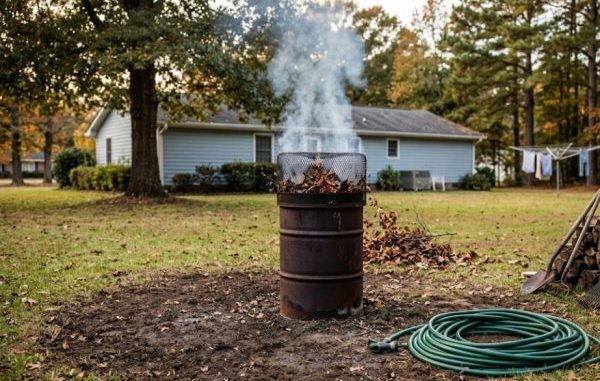
In Columbus County’s unincorporated areas, those living outside of any town or city limits, the use of burn barrels is generally permitted provided the fire is attended at all times and a pressurized water source is within reach.
North Carolina Forest Service permit is legally required for any fire located more than 100 feet from an occupied dwelling.
While no state permit is required for burning within that 100-foot from the home zone, homeowners remain under the jurisdiction of the Columbus County Fire Marshal and must ensure their barrel is equipped with a functional spark-arresting screen to prevent accidental wildfires.
The legal environment changes significantly once you enter incorporated municipal limits, where local ordinances often supersede county-wide freedoms.
In the City of Whiteville, open burning and the use of burn barrels are largely prohibited by city ordinance to protect air quality and prevent structural fire hazards within the dense city center. Similarly, in Tabor City and Chadbourn, the availability of public curbside debris pickup typically makes backyard burning illegal under state air quality rules, which specify that yard waste should only be burned when no public disposal service is provided.
In towns like Lake Waccamaw and Fair Bluff, burning may be permitted on a limited basis, but residents are urged to consult their local fire department before ignition.
Regardless of location, all burning must occur between 8:00 a.m. and 6:00 p.m. and is strictly forbidden on Code Orange air quality days or during Mandatory Burn Bans issued during the volatile spring wildfire season.
Beyond the legal statutes, there is an unwritten “neighborly code” that defines the local voice of Columbus County.
Longtime residents often share the wisdom to “never light the barrel when the neighbor has laundry on the line,” emphasizing that wood smoke is part of rural life, but acrid smoke from leaves or illegal trash is a community nuisance. Local volunteer firefighters frequently remind neighbors to “feed the barrel slow” to ensure a hot, clean burn that doesn’t draw a 911 call from a concerned passerby.
Many locals make quick courtesy calls to the non-emergency dispatch line before striking a match, a practice that saves the local fire department a nuisance trip and keeps the peace in the neighborhood.
A burn barrel isn’t just a tool for yard work; it’s a responsibility that requires one eye on the wind and the other on the neighbor’s fence line.
©2026 bcdollarsaver.com. All rights reserved.


Be the first to comment