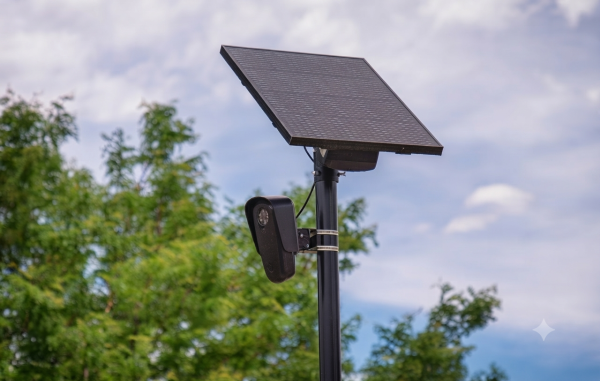
State budget formalizes SBI and NCDOT expansion of license‑plate camera system
By Coastal Carolina News Staff Writer
Raleigh, NC — North Carolina’s automatic license‑plate reader program is shifting from a limited pilot to a permanent statewide network under new provisions in the 2026 state budget. The State Bureau of Investigation and N.C. Department of Transportation began the pilot in 2023 with just over 100 cameras placed at selected locations across the state.
By early 2026, the system had grown to roughly 140 cameras used by 32 law‑enforcement agencies, including the N.C. Highway Patrol, 19 sheriff’s offices, and 12 municipal departments.
The cameras recorded more than 150 million plate scans during the pilot, capturing tag numbers, make, model, color, direction of travel, and time and date. The information is converted into searchable text and checked against SBI databases for stolen vehicles, wanted suspects, and missing‑person cases.
Data may be retained for up to 90 days unless tied to an active investigation.
The budget authorizes permanent installation of ALPR systems on state‑owned land and requires agencies using the technology to submit annual usage reports to the SBI. The SBI must also file a yearly statewide report detailing the number of cameras in operation, the number of data‑access requests, and each agency’s written policy governing ALPR use. Equipment must be above ground, removable, and non‑combustible, and cannot interfere with public‑utility infrastructure.
The statewide expansion is expected to bring additional ALPR coverage to Brunswick and Columbus counties as the SBI moves toward its long‑term goal of placing cameras at every major entry point into North Carolina and along primary travel routes. Both counties sit on corridors that fit the SBI’s criteria, including U.S. 17, U.S. 74/76, N.C. 87, N.C. 211, N.C. 410, and N.C. 701.
Under the new budget authority, SBI and NCDOT can place cameras directly on state‑owned land in these areas, even if local agencies have not purchased units themselves.
Local deputies and officers will still be able to access alerts and investigative leads generated by the statewide system.
Pilot results from participating agencies have shown measurable outcomes, including recovered vehicles, investigative leads, and arrests tied to ALPR alerts. Temporary units were also used during the November 2024 I‑40 sniper investigation, helping identify and locate the suspect. Supporters of the expansion cite faster recovery of stolen vehicles and improved investigative capabilities, while critics warn of expanded surveillance and note that North Carolina’s 90‑day retention period is longer than those in states with stricter limits.
As the statewide network grows, the debate over privacy and public safety is expected to follow it into rural counties.
Some residents view the expansion as government reaching too far, pointing to the ability of ALPR systems to track daily travel patterns and the length of time data may be stored.
Others argue the technology is a necessary tool for modern policing, offering faster identification of stolen vehicles, suspects, and missing persons. With cameras planned for major corridors in Brunswick and Columbus counties, the discussion over how much monitoring is appropriate and how much is needed to keep communities safe, is likely to become part of the local conversation as installations move forward.
Coastal Carolina News is the updated branding for bcdollarsaver.com.
© 2026 CoastalCarolinaNews.com. All rights reserved


Be the first to comment