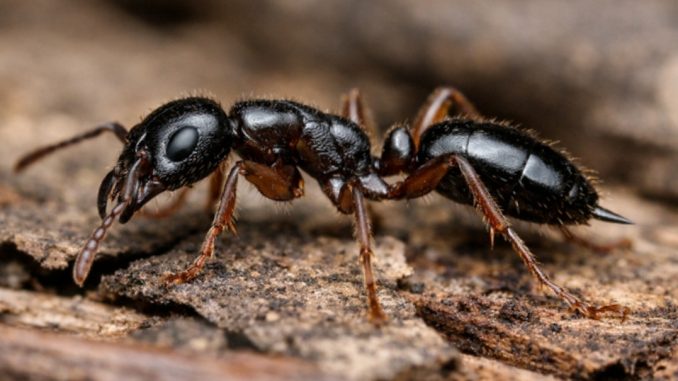
Painful stings, home intrusions, and ecological disruption reported as species spreads in NC and SC
The invasive Asian needle ant (Brachyponera chinensis) is continuing to spread across North Carolina and South Carolina, with entomologists reporting increased sightings in residential neighborhoods, wooded areas, and school campuses.
The species, first detected in the United States decades ago, has become a growing concern due to its painful sting, aggressive expansion, and impact on native ecosystems.
Unlike fire ants, Asian needle ants do not build visible mounds.
Instead, they nest in leaf litter, rotting logs, mulch beds, and shaded sandy soil, making infestations difficult for homeowners to detect.
Colonies are most active from spring through early fall, thriving in the warm, humid climate of the Carolinas.
Researchers note that the ant’s sting can trigger severe allergic reactions, including anaphylaxis, at a higher rate than honeybee stings. Stings typically occur when ants become trapped against skin inside shoes, clothing, or gardening gloves.
Beyond the medical risk, the species poses a significant ecological threat. Asian needle ants displace native ant species that play key roles in seed dispersal and natural pest control. They have also been documented preying on termites, altering food webs in forested areas.
These types of ants enter kitchens, pantries, and bathrooms, particularly during hot, dry periods. Baiting is currently the most effective treatment method, as surface sprays kill only foraging workers and do not eliminate colonies.
State extension offices in North Carolina and South Carolina advise residents to reduce outdoor habitat by clearing leaf litter, trimming vegetation, and storing firewood off the ground. Anyone experiencing repeated stings or signs of indoor infestation is encouraged to contact a licensed pest‑management professional.
The species is expected to continue expanding its range across the Southeast, with researchers monitoring its movement and long‑term ecological effects.
© 2026 BCDollarSaver.com. All rights reserved.


Be the first to comment