
New federal designation moves Raleigh–Wilmington passenger rail into early development
North Carolina’s effort to restore direct passenger rail service from Raleigh to the coast has taken a formal step forward, with the Raleigh–Wilmington corridor now accepted into the Federal Railroad Administration’s Corridor Identification and Development Program. The move places the project into a structured federal pipeline designed to evaluate long‑term passenger rail expansion across the country.
For New Hanover County and the Wilmington metro area, the designation marks the first meaningful progress toward reestablishing a direct rail connection between the state capital and the lower Cape Fear region. All official planning documents identify Wilmington as the sole coastal terminus for the corridor, reflecting the city’s role as the region’s economic anchor and the only coastal endpoint with a rail corridor that can be restored. The proposed route does not extend into Brunswick County or other coastal counties.
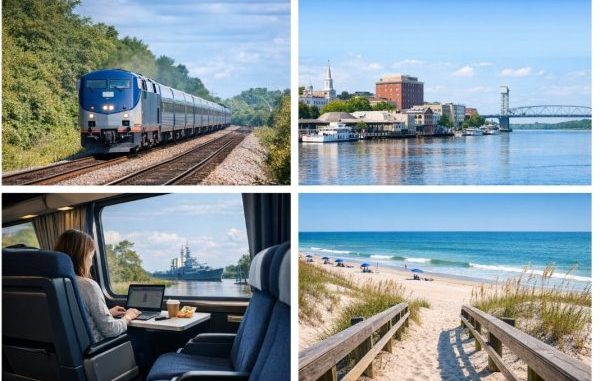
If built, the service would offer a straightforward, single‑seat ride from Raleigh to Wilmington—no transfers and no highway congestion. North Carolina’s existing passenger trains provide a good preview of what riders could expect: onboard restrooms, wide seating with more legroom than buses or planes, power outlets, Wi‑Fi, and a café car offering snacks and drinks. Riders can work, read, or relax throughout the trip, turning travel time into usable time rather than hours spent navigating traffic.
The FRA program provides $500,000 in initial planning support for each selected corridor, funding early scoping work, service development planning, and environmental review. North Carolina’s Rail Division notes that the Raleigh–Wilmington route is in “Step 1: Scoping,” the earliest phase of the federal process. No construction timeline has been set, and the project must still advance through engineering, funding decisions, and federal approvals before any buildout begins.
Today, travelers moving between Raleigh and Wilmington must rely on a combination of train and bus service, often requiring a transfer in Wilson and stretching the trip to more than ten hours. A direct rail connection, state officials say, would offer a more reliable option for residents, visitors, and workers who travel between the Triangle and the southeastern coast.
NCDOT is also evaluating additional eastbound corridors, including a potential Raleigh–Morehead City route, though those studies remain in early review and are not yet part of the federal development pipeline.
Federal transportation officials emphasize that corridor selection does not guarantee future service but establishes a pathway for long‑term planning. North Carolina’s passenger rail system has seen significant ridership growth in recent years; a trend the state believes strengthens the case for expanded service to Wilmington and the surrounding region.
© 2026 BCDollarSaver.com. All rights reserved.


Be the first to comment