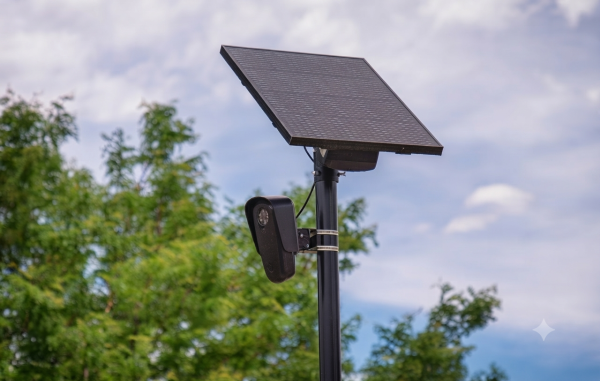
Flock’s role in a multi‑county search underscores its power — and why privacy advocates say movement‑tracking deserves closer scrutiny.
As communities across the Carolinas continue debating the role of Flock Safety’s license‑plate cameras, one question keeps resurfacing: if phones, apps, DMV databases, and security cameras already track so much of our daily lives, why do some residents view Flock’s system as fundamentally different?
Privacy experts say the distinction is not about whether tracking exists, but about what kind of tracking occurs.
Phones and apps collect data because users choose to carry them. DMV records identify vehicle owners but do not record movement. Security cameras capture isolated moments, not patterns. Even airport facial‑recognition systems, which scan passengers during security and boarding, operate within a limited context. Travelers expect identity verification, and the data is tied to a single flight or itinerary. It does not create a day‑to‑day movement history.
Flock’s system operates on a different principle.
The cameras create a continuous, government‑searchable record of vehicle movement for anyone who drives on public roads. There is no opt‑in, no opt‑out, and no practical way to avoid being scanned. Each scan becomes a data point, and those points form a timeline: where a vehicle traveled, when it passed, how often it appeared, and whether it visited sensitive locations such as clinics, churches, protests, or political events.
Supporters say that capability is precisely why the cameras exist. In May, investigators searching for 49‑year‑old Cyrena Anderson – a Horry County woman reported missing used ALPR hits to look for a red Ford F‑150 tied to her husband, Danny L. Osborne, who had been named a person of interest. The truck was detected traveling through Columbus and Brunswick County roads on May 14 and May 15, allowing detectives to narrow the search area and coordinate with North Carolina agencies. It was a clear example of ALPRs being used exactly as intended during a serious investigation.
But the same technology that can help locate a vehicle in a crisis can also create movement records for everyone else. That concern grew after multiple police departments nationwide accidentally released internal ALPR audit logs through public‑records requests. Those disclosures included millions of plate scans and thousands of officer search entries. The releases led to the creation of a public‑interest website called “Have I Been Flocked,” which allows residents to check whether their license plate appeared in the leaked data.
The site has become part of the national conversation, illustrating how easily routine scans can spread beyond their intended use. Privacy advocates argue that once movement data enters a searchable system, it can reveal daily routines, personal habits, and visits to locations that individuals may expect to remain private. Several states have already disciplined or charged officers for improper ALPR searches, including looking up plates tied to personal disputes, romantic partners, or political activity.
Flock Safety has announced nationwide policy changes that will take effect in January 2027, including shorter data‑retention periods, mandatory case‑number requirements, and automatic lockouts for suspicious searches. Those changes apply to every agency using the system, including departments in southeastern North Carolina and northeastern South Carolina.
Still, the core debate remains unresolved. Phones track users. Apps track customers. Security cameras track moments. DMV records track ownership. Airports verify identity during travel. Flock tracks patterns and patterns reveal behavior. That distinction is why the discussion continues, even among residents who support law‑enforcement technology. The cameras may work exactly as intended, but the movement data they generate raises questions that no other system has had to answer.
© 2026 CoastalCarolinaNews.com. All rights reserved.


Be the first to comment