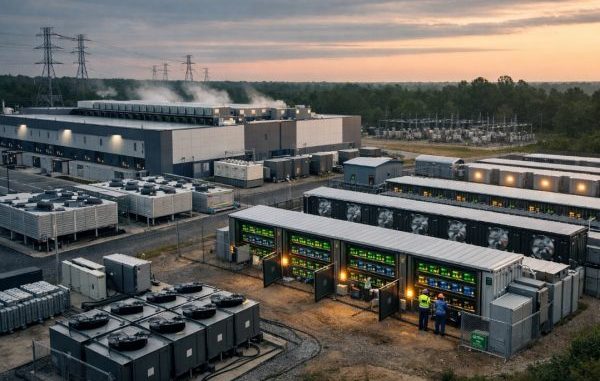
Two fast‑growing industries are chasing the same power supply, and southeastern North Carolina is beginning to feel the early pressure.
Brunswick County, NC — Crypto mining and AI data centers are different technologies, but on the ground, they behave the same. Both rely on dense computing hardware, industrial cooling, and nonstop electricity. Both look for cheap power, access to substations, and industrial‑zoned land. And both are driving some of the fastest load growth utilities have seen in decades.
That overlap is why counties across North Carolina are now discussing crypto and AI in the same breath. Crypto mines can spike local demand quickly, while AI data centers can use 10 to 50 times the energy of a typical commercial building. Together, they create shared concerns: grid strain, noise from cooling systems, land‑use conflicts, and questions about who pays for new infrastructure.
Brunswick County is the only county in the region with clear movement.
Brunswick’s updated ordinance now defines and allows data centers in Industrial General districts, giving the county a framework if a large proposal arrives. Brunswick County Schools is also installing two small, containerized data centers for district operations, far smaller than commercial AI facilities but still part of the same infrastructure landscape.
Columbus County has no crypto or AI data‑center activity, but its proximity to Brunswick and its lower land costs make it a potential target if companies begin looking for expansion sites. Rural counties elsewhere in the state have seen crypto mines arrive first because they can move quickly and plug into existing substations.
Horry County has no known crypto or AI data centers, though South Carolina is becoming a manufacturing hub for equipment used in AI‑center electrical systems. Coastal power costs and land values make Horry a less likely destination, but regional grid planning will still affect the county over time.
The deeper connection between crypto and AI is energy. Both industries are part of a new wave of high‑load growth that can reshape local infrastructure. When a facility comes online, it can draw as much power as a small town. Utilities may need new lines or substations, and ratepayers can feel the effects if costs are spread across the system.
For Brunswick, Columbus, and Horry, the question is not just whether these industries arrive. It’s how much power they need, where they fit, and what trade‑offs communities are willing to accept as the region grows.
© 2026 BCDollarSaver.com. All rights reserved.


Be the first to comment