
By Coastal Carolina News Staff Writer
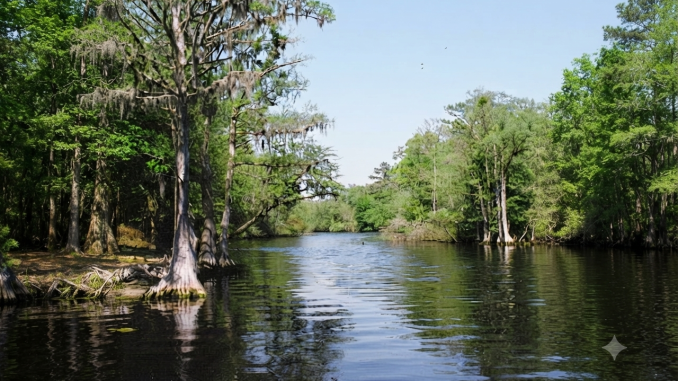
The Lumber River in southeastern North Carolina is easy to spot because the water looks like sweet tea. This happens because leaves, bark, and roots from the nearby cypress trees fall into the river and rot. As they break down, they release natural chemicals called tannins that turn the water a dark, tea-like color.
The river begins in the Sandhills and travels about 115 miles before crossing into South Carolina and joining the Little Pee Dee River. Blue heron, fish, turtles, and other wildlife thrive in the slow, shaded water that winds through quiet bends and sandy banks.
Lumber River State Park, at 2819 Princess Ann Road near Orrum, in Robeson County, ~27 miles from Whiteville and nine miles from Fair Bluff – protects one of the best examples of this blackwater ecosystem.
The park stretches across Robeson and Columbus counties, and the Princess Ann access is a familiar spot for many paddlers. It’s a peaceful place where visitors often bring their own kayak or canoe to explore the river’s gentle curves.
Groups can pre-arrange ranger‑led tours by calling ahead, giving visitors a chance to learn more about the river’s wildlife and the natural process behind its amber color.
The slow pace and calm scenery make the Lumber River one of the easiest and most relaxing waterways to enjoy in the Carolinas.
From its Sandhills start to its connection with the Little Pee Dee River, the Lumber River remains a quiet, untouched stretch of water that continues to shape the landscape of southeastern North Carolina.
© 2026 CoastalCarolinaNews.com. All rights reserved.



Be the first to comment